
News & Insights

Topic: Threat Intelligence

CVE-2022-26143: TP240PhoneHome Reflection/Amplification DDoS Attack Vector

March 8, 2022
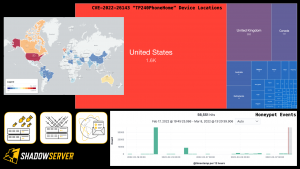
A new reflection/amplification distributed denial of service (DDoS) vector with a record-breaking potential amplification ratio of 4,294,967,296:1 has been abused by attackers in the wild to launch multiple high-impact DDoS attacks. Attacks have been observed on broadband access ISPs, financial institutions, logistics companies, gaming companies, and organizations in other vertical markets. Security researchers, network operators, and security vendors Akamai SIRT, Cloudflare, Lumen Black Lotus Labs, Mitel, NETSCOUT Arbor ASERT, TELUS, Team Cymru, and The Shadowserver Foundation formed a task force to investigate the new DDoS vector and provide mitigation guidance. Vendor Mitel has released software patches which disables the abusable test facility and are actively engaged in remediation efforts with their customers. Vulnerable device information is available through Shadowserver's free daily network reports.

Shadowserver Special Reports - Cyclops Blink

February 23, 2022
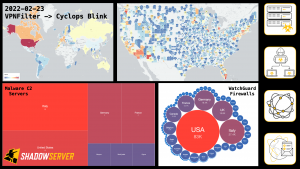
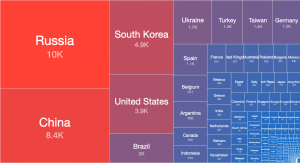
In May 2018, the US DoJ, FBI and industry partners sinkholed the modular network device infecting malware known as VPNFilter, which Shadowserver has been reporting out for remediation to nCSIRTs and network owners each day since. In February 2022 the UK NCSC, US FBI, CISA and NSA jointly announced the discovery of new network device malware, which they have called Cyclops Blink, and see as a more advanced replacement for VPNFilter. A new Shadowserver Cyclops Blink Special Report was issued to our free daily network report subscribers today, detailing IP addresses believed likely to be infected with the Cyclops Blink malware, and the associated C2 servers.

Shadowserver Special Reports – Vulnerable Log4j Servers (2021-12-22 update)

December 22, 2021
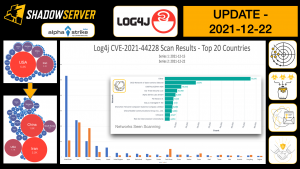
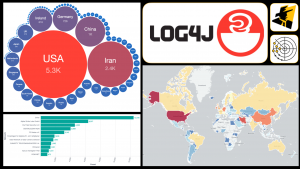
A maximum risk critical vulnerability in the popular Apache Log4j open source logging software was made public as CVE-2021-44228 on December 9th 2021, potentially providing attackers with easy remote code execution on thousands of systems globally. Although Shadowserver decided not to scan for this vulnerability, our honeypots continue to detect IPv4 /0 scanning and exploitation attempts. A second run of our Vulnerable Log4j Servers Special Report provides updated data from Alpha Strike Lab's scanning activity performed during the week since our first Special Report. The updated Special Report is being distributed to National CSIRTs and network owners as a public benefit service to aid in rapid remediation.

Log4j Scanning and CVE-2021-44228 Exploitation - Latest Observations (2021-12-16)

December 16, 2021
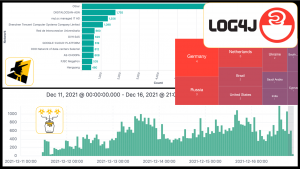
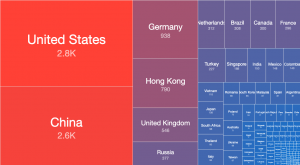
After our recent Special Report and blog post about vulnerable log4j servers, a quick and dirty update on the “log4shell” mass scanning and attempted CVE-2021-44228 exploitation activity we have been seeing across our global honeypot sensor network between Sunday December 11th and Thursday December 16th, including a quick analysis of the top ten Malware Callback URIs observed and server distribution.

Shadowserver Special Reports – Vulnerable Log4j Servers

December 15, 2021
A maximum risk critical vulnerability in the popular Apache Log4j open source logging software was made public as CVE-2021-44228 on December 9th 2021, potentially providing attackers with easy remote code execution on thousands of systems globally. Although Shadowserver decided not to scan for this vulnerability, our honeypots detected rapid growth in IPv4 /0 scanning. This Special Report provides data from Alpha Strike Labs's scanning activity and is being distributed to National CSIRTs and network owners as a public benefit service to aid in rapid remediation.

Continuing Our Africa and Indo-Pacific Regional Outreach

December 1, 2021
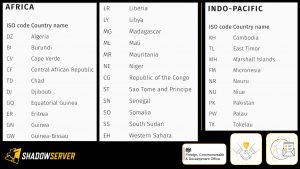
Shadowserver received funding from the UK FCDO in Q1 2021 for a short surge to improve the support we offered to Africa and the Indo-Pacific region. We achieved some good results, so we are providing some public highlights in this blog post. We are also pleased to announce that we have received some additional FCDO funding to continue these efforts through Q4 2021 and Q1 2022, and hope to further expand our free public benefit service coverage to more National CSIRT and additional network owner (ASNs) in these target regions.

Scanning for Accessible MS-RDPEUDP services

January 25, 2021
We have started daily IPv4 /0 scanning for exposed MS-RDPEUDP instances on port 3389/UDP. Aside from the usual risks associated with exposing RDP services to the Internet, this UDP extension of the popular RDP services has been found to be susceptible to amplification DDoS abuse with an amplification factor of over 84. Over 12 000 instances of MS-RDPEUDP have been found to be accessible on the IPv4 Internet.

Accessible Radmin Report - Exposed Radmin Services on the Internet

July 7, 2020
We have recently enabled a new IPv4 Internet-wide scan and report for accessible Radmin services on port 4899/TCP. Radmin is a remote access software product commonly in use today. Our daily scans uncover around 50,000 accessible Radmin services on port 4899/TCP. While Radmin is in general considered a secure mechanism for remote access, care should be taken as with all similar types of services to ensure no misconfiguration has taken place.

Accessible CoAP Report - Exposed Constrained Application Protocol Services on the Internet

June 24, 2020
We have enabled a new scan for exposed CoAP (Constrained Application Protocol) devices on port 5683/UDP. The scan has uncovered around 460 000 exposed CoAP services that can be potentially abused for CoAP amplification DDoS attacks. These services may also leak information or expose other vulnerabilities. This is the third IoT scan implemented as part of the EU CEF VARIoT project.

Open IPP Report - Exposed Printer Devices on the Internet

June 10, 2020
We have enabled a new scan dedicated to finding open IPP (Internet Printing Protocol) devices exposed on port 631/TCP. The roughly 80,000 devices uncovered as a result of the scan have connected to the Internet without adequate access controls or authorization mechanisms in place. This could allow for a potential range of different types of attacks, from information disclosure and service disruption/tampering, to, in some cases, remote command execution. Results of the scan are collected in the new Open IPP report. This is the second scan enabled under the EU CEF VARIoT project.